The short answer
Rekey the locks when the hardware is solid; replace them when the hardware is worn, damaged, or you want a different security tier or style. Rekeying changes the internal pins so the old keys stop working, and it leaves the existing lock bodies, deadbolts, and finish in place. Replacement swaps the whole unit, which is the right call when the old hardware is failing or when you want key control you can verify from day one.
- Rekey if the locks are in good shape and you only need old keys to stop working.
- Replace if the hardware is loose, sticking, corroded, or older than the rest of the door.
- Replace if you want a different finish, a different grade, or a smart lock.
- Either way, a locksmith can match every exterior door to one new key.
What rekeying changes, and what it leaves alone
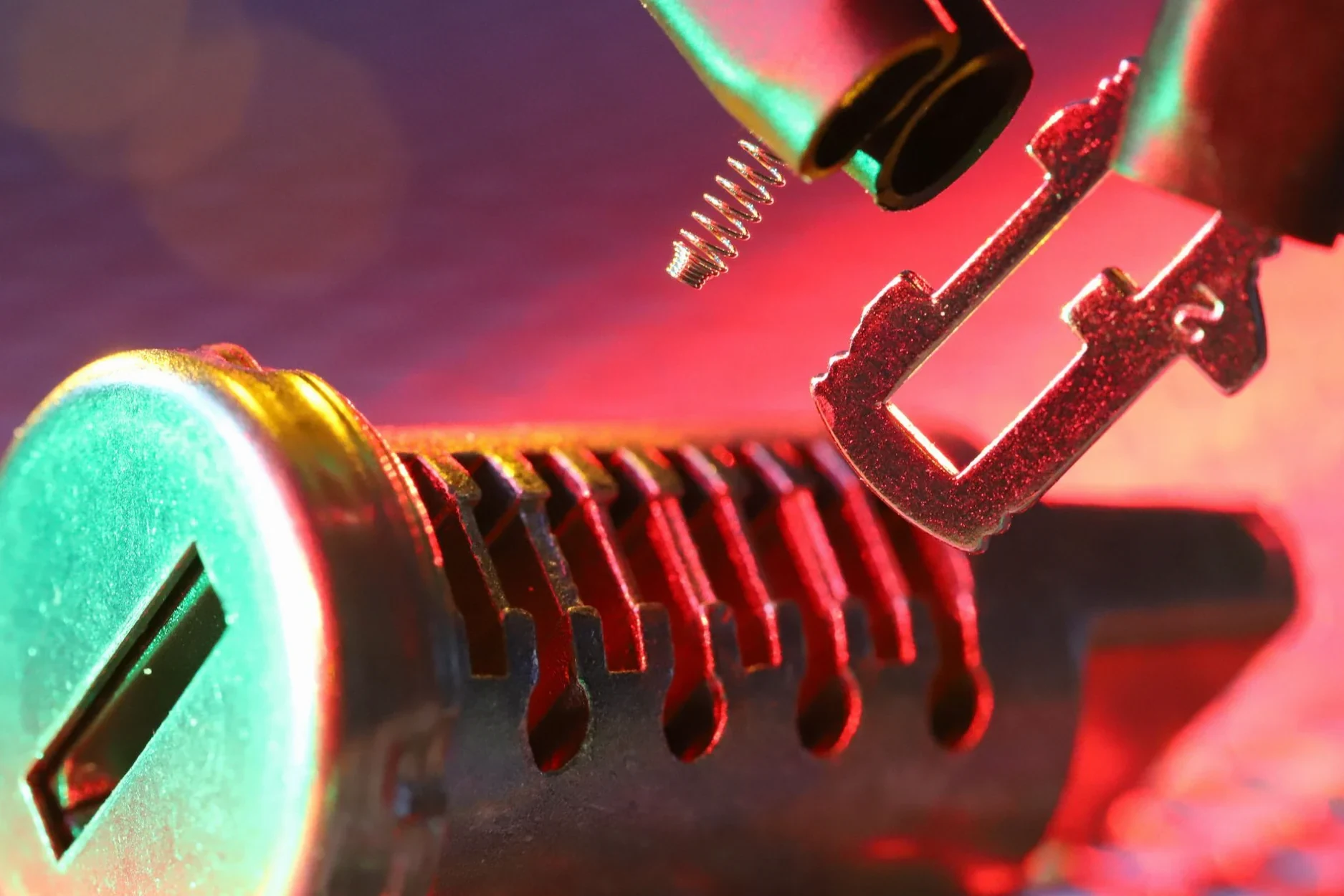
Rekeying changes the pin heights inside the cylinder so the lock only turns with a new key, and it does not change the lock body, the deadbolt, the strike plate, or the finish. A standard pin tumbler cylinder has five pins, which gives roughly 100,000 possible key combinations. A locksmith removes the cylinder, swaps the bottom pins and sometimes the top pins, and reassembles it. The old keys stop working because they no longer line up with the new pin stack.
What rekeying does not do is fix a worn cylinder, a loose deadbolt, or a door that no longer latches cleanly. If the lock sticks in cold weather or the key has to be jiggled, rekeying will not solve that. Rekeying is a keying change, not a repair.
Rekeying is usually the lower-cost route because you are paying for labor and a small set of pins, not a new lock. The exact figure depends on how many cylinders are on the property, whether they are standard or high-security, and whether the locks are on the door or already off it.
When replacement is the better call
Replace the lock when the cylinder is worn, the deadbolt is loose in the door, or the hardware is older than the door itself. A deadbolt that wiggles when you turn the thumb turn has lost its grip in the wood, and a new cylinder will not fix that. Corrosion on coastal or older hardware, a key that has to be pulled out at an angle, and a lock that has been forced are all replacement signals.
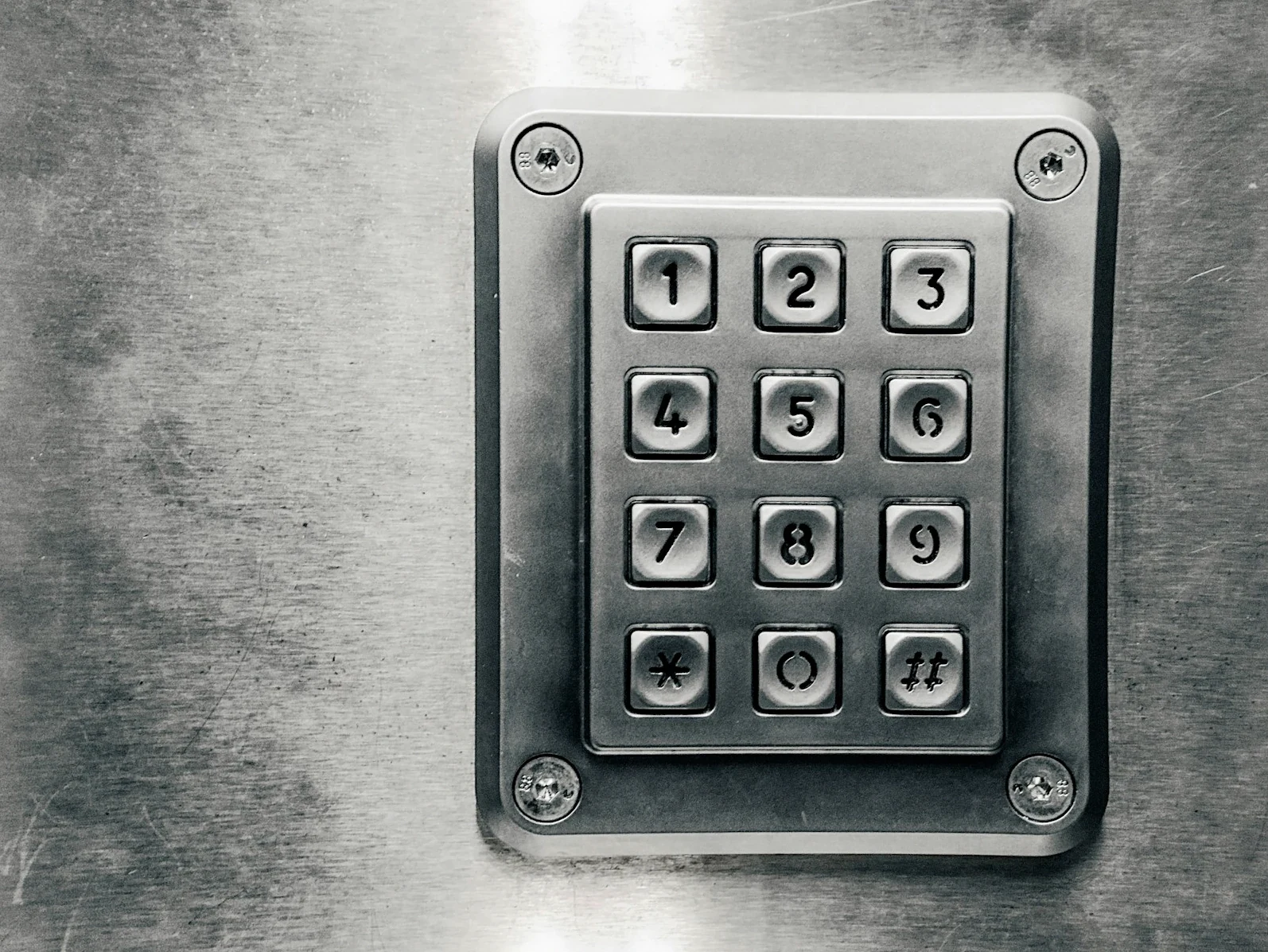
Replacement also makes sense when you want something the old lock cannot give you: a different finish to match new hardware, a keypad or smart lock, or a higher security grade. A smart lock is a replacement, not a rekey, because the cylinder and the electronics are one unit.
If only one door is failing and the rest are fine, you can replace that one unit and rekey the others to match it, so every exterior door still works on one key.
How to check your own locks before you decide
Walk the exterior doors and run this check. If two or more items fail, plan on replacement for that door rather than a rekey.
- Turn the key. It should move smoothly with light pressure. Grinding or catching points to a worn cylinder.
- Wiggle the deadbolt. A deadbolt that moves in the door means the mounting is loose.
- Look at the strike plate. A strike plate held by short screws or sitting in a chewed-up mortise will not hold under force.
- Check the finish. Peeling, pitting, or rust on the cylinder face usually means the inside is not far behind.
- Count the keys you were given. If you cannot account for every key, rekeying is the way to make the old ones stop working.
- Test the latch. A door that needs a shoulder to close will keep wearing the lock.
A move-in checklist for the first week
Handle the exterior doors first, then the rest of the property. This order keeps the place secure while you work through it.
- Day 1: list every exterior door and every lock on it, including the deadbolt and any separate knob lock.
- Day 1: note which doors are used for entry and which are secondary.
- Day 2: decide per door whether it is a rekey or a replacement, using the check above.
- Day 3: gather every key you were given, including spares from the seller, the agent, or a drawer.
- Day 4: schedule the work and ask for all exterior doors to be keyed to one key.
- After the work: test every key in every lock, and confirm the old keys no longer turn.
What changes the price
The price depends on how many cylinders are being keyed, whether the locks are standard or high-security, whether the hardware is on the door or brought in, and whether any door needs a replacement unit instead of a rekey. A single standard cylinder is the simplest job. A property with several exterior doors, a mix of knob locks and deadbolts, and one failing deadbolt is more work because the locksmith has to match everything to one key after the replacement.
High-security cylinders cost more to rekey because the pins and keys are not the same as a standard hardware-store cylinder. Smart locks and keypad locks are replacements, so the price tracks the unit you choose, not the rekey labor.
Ask for the quote in writing and ask what it covers: how many cylinders, whether the locks are removed and reinstalled, and whether new keys are included. The number itself needs an on-site estimate because the count and condition of the locks are what drive it.
Need locksmith in Charlotte? Get a free estimate.
+19802012799